
Storage of vegetables in a vacuum container, trying it myself for 25 days
![Storing Vegetables in Vacuum Containers: My 25-Day Experiment [Featured Image — VAKUEN Empty Container Set (Landscape Photo)] → Automatically displayed below the title / Not repeated in the body of the text. At our house, we often end up throwing away vegetables because they wilt before we can finish eating them. In particular, we often end up throwing away or freezing green onions and serrano peppers before we can finish them. So, using VAKUEN vacuum containers, I decided to write down the dates this time and keep track of just how long the vegetables actually last. I stored blueberries, king oyster mushrooms, zucchini, cucumbers, green onions, and Serrano peppers, and the results varied quite a bit depending on the ingredient. After checking them over 25 days, I found significant differences in the results—from blueberries to green onions—while cucumbers went soft relatively quickly. The vacuum containers I bought on Prime Day were the VAKUEN 8-piece set. I purchased them during Amazon Prime Day using discounts and coupons for $51.65, including tax. At the regular price, I probably wouldn’t have bought them right away, but since the discount was so big, I decided to give them a try. Based on my own storage results: Blueberries — Day 8 ★★★★★ They were in good condition until the 8th day, and I ate them all that day. So, I wasn’t able to check how much longer they could have been stored. [Photo 1 — Blueberries on Day 8 / August 24 / All eaten] King oyster mushrooms — Day 14 ★★★½ They weren’t as fresh as when I first got them, but I ate everything that was left by Day 14. [Photo 2 — Collage of king oyster mushroom condition by day] Zucchini — Day 19 ★★★ I didn’t throw them away until Day 19, but their freshness had definitely declined compared to the beginning. [Photo 3 — Collage showing the condition of the zucchini by date] Cucumber — Day 19 ★½~★★ It produced the most water during storage, and by Day 19, it had become very mushy, so I eventually threw it away. Although its condition deteriorated faster than other ingredients, it did seem to last longer than when I usually store it. However, since I didn’t compare it directly to a standard container this time, I couldn’t determine exactly how much of a difference there was. [Photo 4 — Collage showing the condition of the cucumber by day] The star ratings are my subjective assessment of freshness based on what I observed while storing the items. The green onions and Serrano peppers stored the longest The green onions and Serrano peppers were stored together in the same container, and I monitored them for the longest period. The green onions were in pretty good condition until the 22nd day. However, when I checked again on day 25, about 20–30% of the total had started to wilt or become mushy. [Photo 5 — Green Onions: Day 8 → 14 → 17 → 22 → 25 Collage] The Serrano peppers also began to deteriorate around the same time. By Day 24, one had become mushy, and by Day 25, while one of the remaining two was still fine, the other had started to lose its freshness. Even though they were stored together in the same container, the changes in the scallions and Serrano peppers weren’t exactly the same. [Photo 6 — Actual photo of the Serrano peppers on Day 25] The two remaining Serrano peppers on Day 25. One was still fine, while the other had started to lose its freshness. Conclusion on Storing Vegetables in a Vacuum Container for 25 Days My conclusion is that while there were differences depending on the ingredient, I plan to continue using this method for vegetables that work well with it. Not all vegetables lasted the same amount of time. Cucumbers deteriorated faster than other ingredients, and green onions and Serrano peppers also began to show signs of deterioration as the three-week mark passed. Still, I was pleased that I was able to keep and eat the green onions—which I usually throw away or freeze before finishing—for over three weeks this time. Overall, I did feel that the produce lasted longer than when I stored it the way I usually do. However, since this wasn’t a comparative experiment where I stored the same ingredients in both vacuum containers and regular containers, I can’t say exactly how many extra days they lasted because of the vacuum containers. Based on my personal experience this time, the most accurate conclusion is that there were significant differences depending on the type of produce. Next time, I plan to compare them with regular containers. While this time I recorded how long each item lasted when stored in the vacuum container, next time I’ll split the same vegetables between a regular container and a vacuum container and store them simultaneously. In particular, I think I’ll be able to see the actual difference more accurately if I store cucumbers—which spoiled faster than other ingredients this time—in both types of containers. At the regular price, it’s a bit of a stretch for me. However, if there’s a similar discount during Prime Day like the one I got, I’d consider buying it again. Check the current price of the VAKUEN vacuum containers I used → Amazon affiliate link This post contains Amazon affiliate links. If you make a purchase through these links, I may receive a small commission at no additional cost to you. This is another entry from The Lovely Trio, documenting our hands-on experiments and findings.](https://thelovelyset.com/wp-content/uploads/2026/09/vakuen-vacuum-container-produce-storage-1024x768.png)
We often buy vegetables at home and end up throwing them away because they wither before we can finish them. Especially with green onions and serrano peppers, we often couldn't finish them and ended up throwing them away or freezing them.
So while using the VAKUEN vacuum container, this time I even wrote down the date I kept a log of how long vegetables actually last.
I tried storing blueberries, king oyster mushrooms, zucchini, cucumbers, green onions, and even serrano peppers, and the results were quite different for each ingredient. After checking for 25 days, there was a big difference in the results ranging from blueberries to green onions, and the cucumbers spoiled relatively quickly.
Vacuum containers purchased on Prime Day
What I used is VAKUEN Vacuum Container 8-Piece Set.
Apply discounts and coupons during Amazon Prime Day. $51.65 (tax included).
At the regular price, it would have been a bit burdensome to buy readily, but since the discount was so big, I decided to give it a try.
As a result of storing it myself
Blueberry — 8 days ★★★★★
It was in good condition until the 8th day and I ate all of it that day. So I couldn't check how much longer it could have been stored after that.
![Storing Vegetables in Vacuum Containers: My 25-Day Experiment [Featured Image — VAKUEN Empty Container Set (Landscape Photo)] → Automatically displayed below the title / Not repeated in the body of the text. At our house, we often end up throwing away vegetables because they wilt before we can finish eating them. In particular, we often end up throwing away or freezing green onions and serrano peppers before we can finish them. So, using VAKUEN vacuum containers, I decided to write down the dates this time and keep track of just how long the vegetables actually last. I stored blueberries, king oyster mushrooms, zucchini, cucumbers, green onions, and Serrano peppers, and the results varied quite a bit depending on the ingredient. After checking them over 25 days, I found significant differences in the results—from blueberries to green onions—while cucumbers went soft relatively quickly. The vacuum containers I bought on Prime Day were the VAKUEN 8-piece set. I purchased them during Amazon Prime Day using discounts and coupons for $51.65, including tax. At the regular price, I probably wouldn’t have bought them right away, but since the discount was so big, I decided to give them a try. Based on my own storage results: Blueberries — Day 8 ★★★★★ They were in good condition until the 8th day, and I ate them all that day. So, I wasn’t able to check how much longer they could have been stored. [Photo 1 — Blueberries on Day 8 / August 24 / All eaten] King oyster mushrooms — Day 14 ★★★½ They weren’t as fresh as when I first got them, but I ate everything that was left by Day 14. [Photo 2 — Collage of king oyster mushroom condition by day] Zucchini — Day 19 ★★★ I didn’t throw them away until Day 19, but their freshness had definitely declined compared to the beginning. [Photo 3 — Collage showing the condition of the zucchini by date] Cucumber — Day 19 ★½~★★ It produced the most water during storage, and by Day 19, it had become very mushy, so I eventually threw it away. Although its condition deteriorated faster than other ingredients, it did seem to last longer than when I usually store it. However, since I didn’t compare it directly to a standard container this time, I couldn’t determine exactly how much of a difference there was. [Photo 4 — Collage showing the condition of the cucumber by day] The star ratings are my subjective assessment of freshness based on what I observed while storing the items. The green onions and Serrano peppers stored the longest The green onions and Serrano peppers were stored together in the same container, and I monitored them for the longest period. The green onions were in pretty good condition until the 22nd day. However, when I checked again on day 25, about 20–30% of the total had started to wilt or become mushy. [Photo 5 — Green Onions: Day 8 → 14 → 17 → 22 → 25 Collage] The Serrano peppers also began to deteriorate around the same time. By Day 24, one had become mushy, and by Day 25, while one of the remaining two was still fine, the other had started to lose its freshness. Even though they were stored together in the same container, the changes in the scallions and Serrano peppers weren’t exactly the same. [Photo 6 — Actual photo of the Serrano peppers on Day 25] The two remaining Serrano peppers on Day 25. One was still fine, while the other had started to lose its freshness. Conclusion on Storing Vegetables in a Vacuum Container for 25 Days My conclusion is that while there were differences depending on the ingredient, I plan to continue using this method for vegetables that work well with it. Not all vegetables lasted the same amount of time. Cucumbers deteriorated faster than other ingredients, and green onions and Serrano peppers also began to show signs of deterioration as the three-week mark passed. Still, I was pleased that I was able to keep and eat the green onions—which I usually throw away or freeze before finishing—for over three weeks this time. Overall, I did feel that the produce lasted longer than when I stored it the way I usually do. However, since this wasn’t a comparative experiment where I stored the same ingredients in both vacuum containers and regular containers, I can’t say exactly how many extra days they lasted because of the vacuum containers. Based on my personal experience this time, the most accurate conclusion is that there were significant differences depending on the type of produce. Next time, I plan to compare them with regular containers. While this time I recorded how long each item lasted when stored in the vacuum container, next time I’ll split the same vegetables between a regular container and a vacuum container and store them simultaneously. In particular, I think I’ll be able to see the actual difference more accurately if I store cucumbers—which spoiled faster than other ingredients this time—in both types of containers. At the regular price, it’s a bit of a stretch for me. However, if there’s a similar discount during Prime Day like the one I got, I’d consider buying it again. Check the current price of the VAKUEN vacuum containers I used → Amazon affiliate link This post contains Amazon affiliate links. If you make a purchase through these links, I may receive a small commission at no additional cost to you. This is another entry from The Lovely Trio, documenting our hands-on experiments and findings.](https://thelovelyset.com/wp-content/uploads/2026/09/vacuum-container-blueberries-day-8-1024x956.jpg)
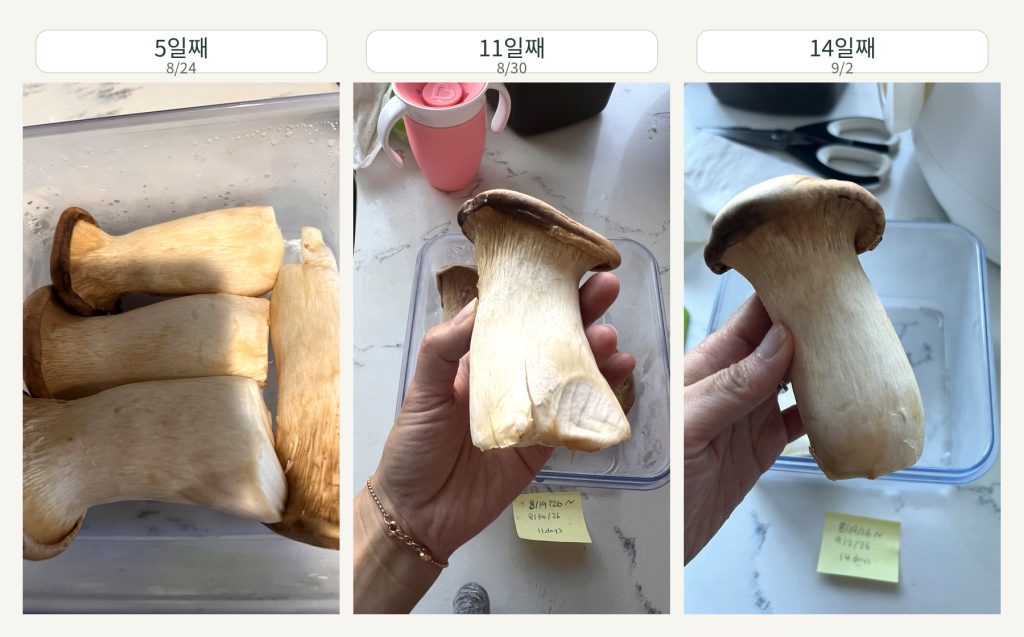
King oyster mushroom — 14 days ★★★½
Even though it was less fresh than at first, I ate all the remaining amount on the 14th day.
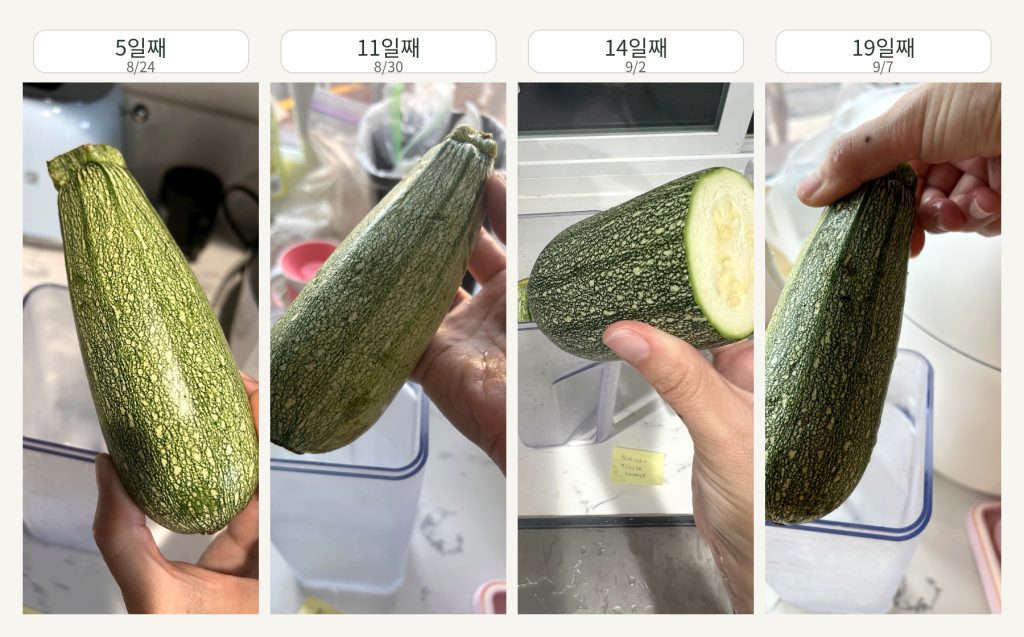
Aehobak — 19th ★★★
I didn't throw it away until the 19th day, but the freshness definitely dropped compared to the beginning.
Cucumber — 19th ★½~★★
It produced the most water while being stored, and by the 19th day, it became very mushy, so I ended up throwing it away.
Compared to other ingredients, its condition deteriorated quickly, but, It felt like it lasted longer than when I usually just stored it. However, this time it wasn't compared with a regular container, so we couldn't confirm the exact difference.

The ratings are based on the condition as I personally observed while keeping them in my possession. Subjective freshness evaluation.
The green onions and serrano peppers stored the longest
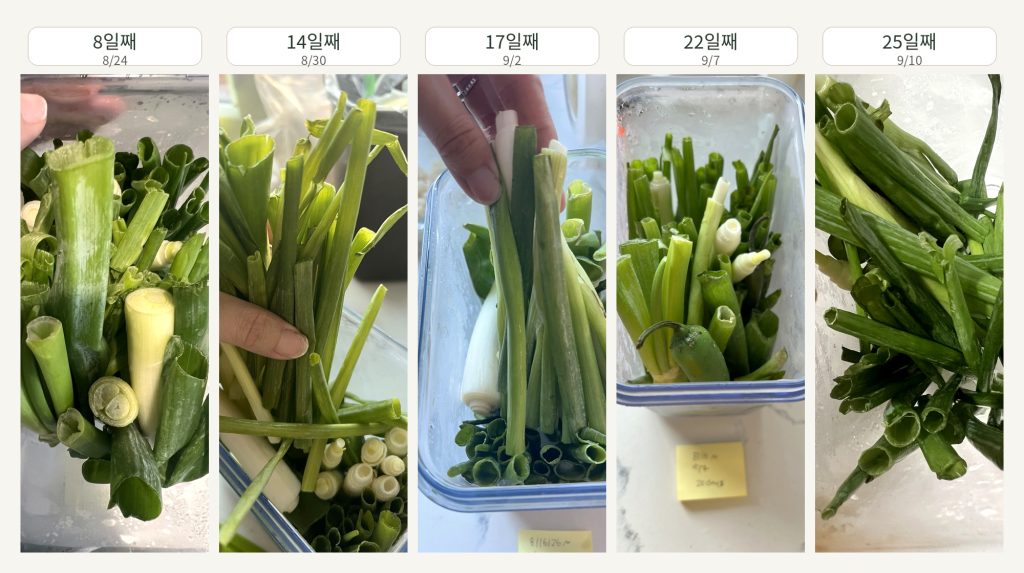
I put the green onion and serrano peppers together in the same container and watched them for the longest time.
Up to the 22nd day, the condition of the green onions was pretty good. But When I checked again on the 25th, I noticed that about 20–30% of the total had started to wilt or soften.
Serrano peppers started to decline in quality around the same time. On day 24, one became mushy, and on day 25, one of the remaining two was still okay, but the other one started to lose its freshness.
Even though they were stored together in the same container The changes in the green onions and Serrano peppers were not the same.
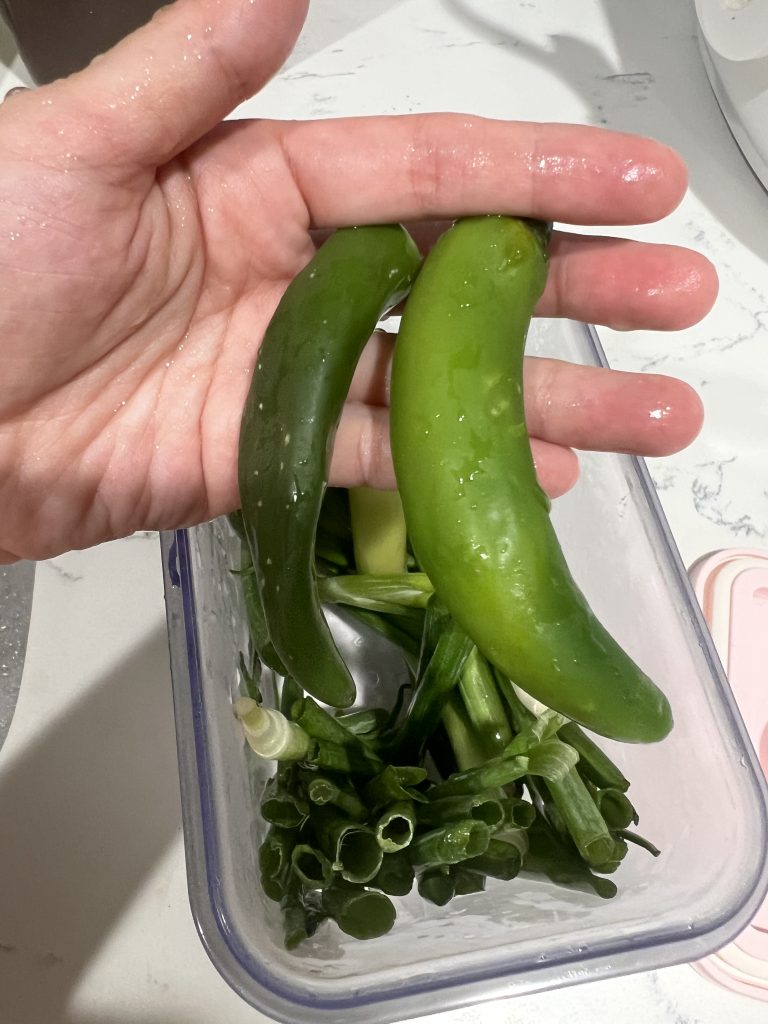
Two serrano peppers left on the 25th day. One was still okay and one was starting to lose its freshness.
Conclusion after using vacuum vegetable containers for 25 days
My conclusion is that while there were differences depending on the ingredients, I plan to continue using it for vegetables that work well with it.
Not all vegetables lasted the same amount of time. Cucumbers deteriorated faster than other ingredients, and green onions and serrano peppers also started showing signs of deterioration a little bit after three weeks.
Even so, the green onions that I usually threw away or froze before, this time I liked that it could be kept and eaten for over three weeks.
Overall, it did feel like it lasted longer than what I usually store. However, since this time it wasn't a comparative experiment where I stored the same ingredients in a regular container together, I can't say for sure how many days longer it lasted thanks to the vacuum container.
Based on my personal experience this time, There was quite a bit of difference depending on the ingredients.That is the most accurate conclusion.
Next, I'm thinking of comparing it with a regular container.
If this time we recorded how long each lasted when placed in a vacuum container, next time we should I'm going to try dividing it between regular containers and vacuum containers and storing them at the same time.
Especially this time, if we divide the cucumbers, which spoiled faster than other ingredients, into two containers and store them, I think we'll be able to see more accurately just how much of a difference there actually is.
At the regular price, it's a bit burdensome for me. But like when I bought it, If they offer a similar discount on Prime Day, I am thinking of buying it again.
View VAKUEN vacuum containers currently sold on Amazon
They are products from the same brand, but the sizes and configurations are different.
This post contains Amazon affiliate links. If you make a purchase through these links, I may earn a small commission at no additional cost to you.
Tried, tested, and documented again today,
this is a record from The Lovely 셋.
What did you think?
